

The startup world talks a lot about the “Minimum Viable Product” or MVP. But what happens after that first simple version of your idea goes live?
That is where the real work begins. Moving from a basic product to a business that makes millions is the goal for many. But few actually pull it off.
In Africa, a new generation of founders is proving it is possible. They started with small ideas, simple apps, and basic software.
Then they paid close attention to what their users needed, changed their plans when necessary, and built real, lasting businesses. Some started in tiny offices in Lagos or Nairobi. Others began with just a few friends testing an idea.
This article looks at ten African startups that leaped MVP to millions. Their stories show that you do not need perfect conditions. You just need a clear problem to solve, a commitment to your customers, and the drive to keep building.
But before we get into the stories, a quick word. Building a digital product that people love is hard. At Charisol, we know this well.
Our founder, Dolapo Olisa, is a Mechanical Engineer, DevOps Engineer, and UX Designer. He saw how small businesses and startups struggled to find skilled tech talent. So, he built a bridge. That is how Charisol was born.
We have grown into a digital design and development agency with a team of talented young people across the globe.
We partner with small businesses and startups in the UK, the US, Canada, and Nigeria to help them launch digital products that grow their business. If you have an idea for a digital product, our mission is to help you go from that first version to something that scales.
Our core values—like putting users first, leading with grace, and building trust with honesty—guide everything we do. You can learn more about our story and what we believe in on our About page. Now, let us get into the stories that inspire us.
10 African Startups That Scaled from MVP to Millions
These ten companies come from different countries and work in different industries. But they all share one thing. They figured out how to grow.
1. Moniepoint: The Unicorn That Built Trust First.
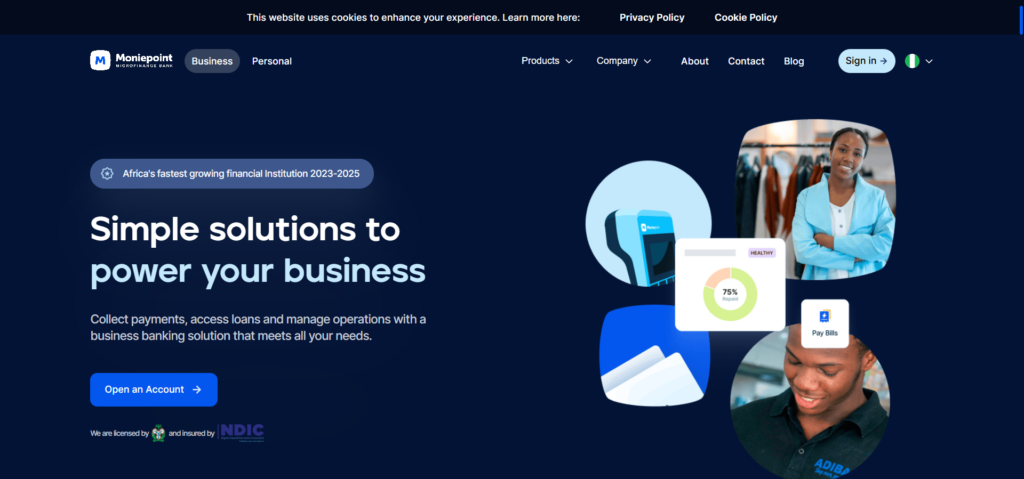
Moniepoint started as a company called TeamApt. The founders saw that small business owners in Nigeria had a hard time getting reliable banking services.
So, they built a simple solution. What made Moniepoint different was not just their product. It was how much they cared about their customers.
While other banks took five to ten days to fix a failed transaction, Moniepoint did it in under 48 hours. That focus on trust turned their users into their biggest fans. Word spread fast.
By October 2024, Moniepoint became a unicorn valued at over 1 billion after a $110 million funding round.
Today, the company processes over 1 billion transactions worth $22 billion every month for ten million businesses and people. The lesson here is simple. If you build something reliable, people will notice.
2. Flutterwave.
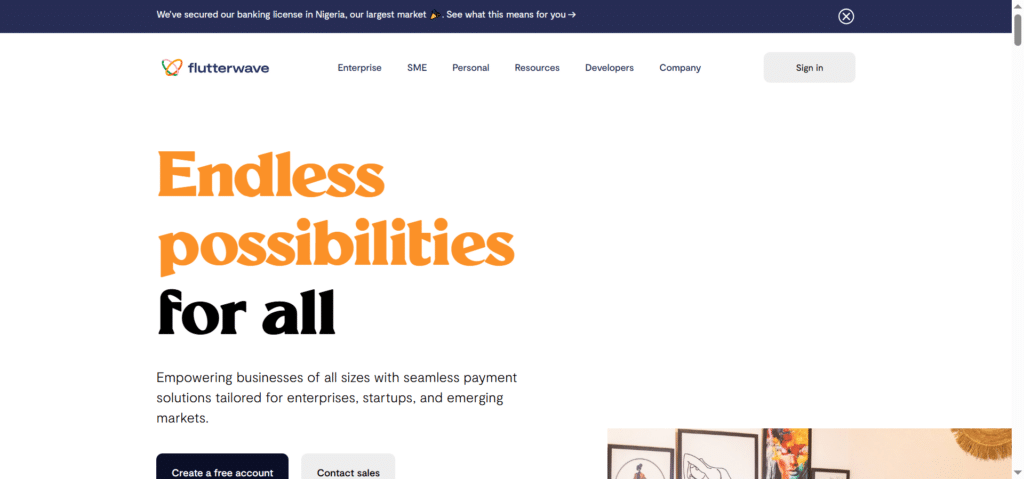
Flutterwave was launched in 2016 with a big goal: to build the payment infrastructure for all of Africa. The problem was clear. Accepting payments across different African countries was a huge mess.
Every country has different banks, different rules, and different ways to pay. Flutterwave built an API-first platform to handle all that complexity. They made it simple for businesses, big and small, to accept payments from anywhere.
Fast forward to today, Flutterwave has a valuation of over $3 billion and powers transactions for global brands like Uber and Booking.com. They built the rails. And then the money followed.
3. Paystack.
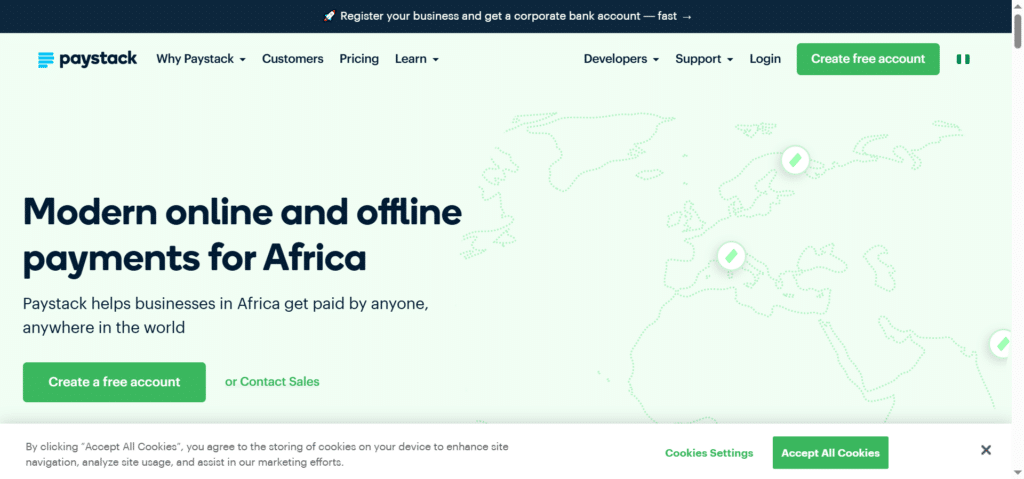
Before Stripe bought Paystack for over $200 million, it was just an idea. The founders built a minimum viable product (MVP) in just two weeks.
They piloted it, and then announced it with a simple blog post. They spent months watching how people used it and listening to feedback.
That feedback shaped everything they built next. By the time they launched publicly, they had 1,407 live customers processing millions of transactions. Paystack shows that you do not need a big launch.
You just need to start small, listen hard, and improve constantly. For more insights on how to approach building your own product from start to finish, check out our blog.
4. M-KOPA.
M-KOPA began with a bold question in Nairobi. What if families who earn daily wages could still own life-changing products, without any credit history? They started with pay-as-you-go solar panels. Customers paid a small deposit, then daily micropayments.
It worked. By 2025, M-KOPA had over 5 million customers across Kenya, Uganda, Nigeria, Ghana, and South Africa. They have extended over 1.5 billion in credit to people who were locked out of formal banking.
Today, they are also Africa’s largest smartphone assembler, building phones right in Nairobi. Their revenue is nearing 400 million annually. M-KOPA shows how an MVP can grow into an entire ecosystem.
5. Selar.
Selar is an e-commerce platform that helps creators sell their work. The founder did not start with a big plan. He just started building something he wanted to exist. His first customer was not a stranger. It was a friend he convinced to list his music on the platform. For a while, growth was slow.
But the founder kept asking users what they wanted and kept improving. By 2025, Selar paid out over $12.8 million to creators across Africa, nearly double what it paid the year before.
This story is a perfect example of how listening to users and being ready to pivot can lead to massive growth. To learn more about our own process of building products that users love, visit our Process page.
6. Renda.
Most startups chase funding first. Renda did the opposite. They built a tech-enabled logistics platform, connecting businesses to warehousing and last-mile delivery.
They did not own a single truck or warehouse. They focused on solving real customer problems and monetized early. Their CEO said that they crossed the $1 million revenue mark before raising any external capital.
That milestone was proof that their model worked. After that, investors came to them. Renda now serves over 700 businesses across Nigeria and Kenya. Their advice is clear. Focus on getting paying customers first. Let that validate your product.
7. Tripdesk
Mark Essien, the founder of Hotels.ng, decided to build a new product called Tripdesk. It is an AI-driven travel management platform. Within four months of launch, Tripdesk had already generated $2.3 million in revenue, with 30% of that being pure profit.
How did he move so fast? He had spent years building HNG, a talent pipeline of trained software developers, designers, and product managers.
When he needed to build something new, he could assemble a team in a week. The lesson is that the most important asset you can build is a strong team.
8. eShandi.
eShandi is a Zambian fintech that shows the power of saying no. Instead of trying to serve everyone, they built an AI-powered credit scoring system to find the right customers. In 2020, they made 100,000 in revenue.By2023, they had grownthatto12.2 million.
That is a 122x increase in just three years. They serve one million individuals and SMEs across four countries. But they got there by being ruthlessly selective. They proved that focusing on the right million customers is better than serving millions of the wrong ones.
9. Zuri Health.
Sometimes, the best products come from personal pain. The co-founder of Zuri Health, Ikechukwu Anoke, faced a terrifying moment.
His newborn daughter, Zuri, almost did not survive her birth because a specialist could not be found in time. He promised that no family should ever face that.
So he built Zuri Health, a digital healthcare platform that offers virtual consultations, lab test bookings, medication delivery, and chronic care management.
They meet patients where they are, through mobile apps, WhatsApp, and even SMS for people without smartphones.
Zuri Health shows that when you solve a problem that matters deeply to you, users will feel that passion and trust you.
10. Bildup AI
Bildup AI is an AI-powered learning platform based in Nigeria. They saw that the education system was not preparing young people for the future of work.
So, they built an ecosystem that combines AI facilitators, academic advisors, and career coaches all in one app.
They raised $400,000 in an oversubscribed funding round to expand their physical AI learning centres across Nigeria.
Their approach works because it is affordable and practical. They have reduced learning fees by 80% and helped users learn 70% faster than traditional training centers. Bildup AI is building the human capital that will power Africa’s tech revolution.
FAQs
What is an MVP, and why is it important?
An MVP is the simplest version of your product that you can build to start learning from real users. Instead of spending months building a perfect product that nobody wants, you build a basic version quickly, put it in front of people, and improve it based on their feedback. It saves time, money, and wasted effort.
How do you know when to move on from the MVP stage?
You know it is time to move on when you have clear proof that people want your product. This proof could be growing sales, high user engagement, or people telling their friends about you. The startups in this article all had one thing in common. They listened closely to their earliest users and only added new features when those users asked for them.
Do I need a lot of funding to scale my startup?
Not necessarily. Look at Selar and Renda. They grew for years without big funding rounds. They focused on getting paying customers and reinvesting that money into the business. Funding can help you grow faster. But a good business model should work even without it.
What kind of MVP can Charisol help me build?
We help small businesses and startups build custom digital products, from simple mobile apps to complex web platforms.
Our team works closely with you to understand your users, test your idea quickly, and build something that solves a real problem.
We follow our mission to help you accomplish your growth objectives. If you are ready to bring your idea to life, you can get started here.
From MVP to Millions: Your Turn
These ten stories show that the path from MVP to millions is not a straight line. It involves late nights, hard conversations with users, and the courage to change your plan when the data tells you to. But it is possible. Every single one of these companies started with a simple question. What if?
So here is a question for you. What problem in your community or industry do you see that needs solving? And what is stopping you from building the first simple version of a solution today?