

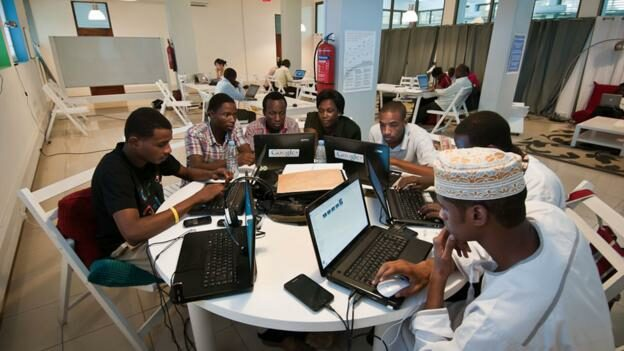
The story of African technology is no longer just about solving local problems. For years, the narrative was focused inward—how to connect a farmer to a market, or how to send money across the continent.
Now, something remarkable has changed.
African startups are not just looking at their own neighborhoods anymore. They are building global products from day one.
Picture a developer in Lagos building a financial tool that helps a business owner in London accept payments. Think of a designer in Nairobi whose user interface is being used by a startup in Silicon Valley. This is not a future prediction. This is happening right now. Across the continent, a new generation of founders is proving that world-class technology can be built anywhere, with the right talent and the right mindset.
So, what changed? And how are they pulling it off?
The New Wave of African Startups
If you follow tech news, you have probably heard of the big names. Flutterwave, valued at $3 billion, helps businesses across Africa handle payments.
Moniepoint powers millions of small businesses. These companies, often called “unicorns,” have shown that African startups can reach massive scale.
But the current shift goes deeper. It is not just about payment processing. African founders are building software, artificial intelligence tools, and digital marketplaces that serve customers everywhere.
Andela, for example, built a platform to connect global companies with African software developers. They took a local resource—brilliant technical talent—and packaged it for the world. Then there is Klasha, a Nigerian startup that helps international brands sell to African customers by handling cross-border payments. They are essentially building the bridge for global commerce.
Even beyond the tech giants, fresh ideas are popping up all over. Companies like Anka (Ivory Coast) help African businesses find buyers and ship products anywhere in the world using partnerships with major logistics providers like DHL.
Sokofa, a soon-to-launch marketplace, connects African artisans directly to global buyers—allowing someone in the US to buy custom-made fashion from a tailor in Nigeria without the usual headaches of international shipping.
This is the new reality. The “made in Africa” label is now attached to software that competes with the best in the world.
Why This Is Happening Now
You might wonder why this boom is happening right this moment. Several factors are coming together.
First, the infrastructure is finally catching up. Mobile internet across Africa has become faster and more affordable. Digital payment systems are more reliable. This foundation allows founders to build products that work seamlessly, whether their user is in Accra or Austin.
Second, the talent pool is exploding. Africa has the youngest population in the world. A huge percentage of that population is digitally native—they grew up with smartphones and computers. Formal training is also expanding. For every problem a startup faces, there is a young, hungry engineer in Africa ready to solve it.
Third, global investors are paying attention. In 2025, African startups raised over $3 billion in funding. That is a 33% increase from the previous year. International money is betting that these founders and their teams can compete globally.
The Talent That Makes It Possible
You cannot build a global product without a world-class team. This is where the conversation gets really interesting.
Global companies are increasingly looking to Africa for remote talent. A recent report found that nearly 63% of international companies are already hiring remote workers from Africa, especially in tech and finance. Why? Cost-effectiveness is a big reason, sure.
But more importantly, companies want access to the high skill levels and strong English and French language proficiency that African professionals offer.
Software development is the most in-demand skill, followed closely by data science and user interface design. These are exactly the skills needed to build digital products for a global audience.
This is where a platform like Charisol comes into the picture.
Charisol was founded by Dolapo Olisa, a Mechanical Engineer, DevOps Engineer, and UX Designer. He saw a clear gap in the market.
On one side, you had small businesses and startups in the UK, US, Canada, and Nigeria needing high-quality digital products. On the other side, you had skilled tech talent in Africa ready to do the work.
The bridge between them was missing. So Charisol built that bridge.
Today, Charisol has grown into a digital design and development agency with a growing team of young, tech-skilled individuals.
They are “changing the world, one digital product at a time”. They have worked with numerous businesses globally, helping them launch digital products and scale successfully.
The mission is simple: to build custom digital products that help small businesses and startups accomplish their growth objectives. The vision is to become a top tech partner for African-owned businesses around the world.
Turning Ideas into Global Products
So, how do these products actually get built? How does an idea become a tool that people in different countries actually want to use?
The process requires more than just writing code. It requires deep collaboration and a user-first mindset. This is a core value at Charisol: “Put users first”.
Building global products means you cannot just design for your own culture. You have to design for everyone. You have to test your assumptions, get feedback from real people, and iterate quickly.
Charisol has a clear process for this. It starts with empathy for the user, moves into planning and design, and then into development and launch.
Their core values guide every step: “Don’t reinvent the wheel, innovate”. You should look at existing solutions, see what works, and then build something smarter. “Don’t be an island, collaborate”. The best products come from teams that share ideas and work together openly.
And finally, “Build trust with uncompromising honesty and integrity”. This is crucial when you are serving clients across different time zones and cultures.
Challenges That Exist (And How to Solve Them)
It would not be honest to pretend everything is perfect. African startups building global products face real obstacles.
Funding cycles have been uneven. In the first half of 2025, tech funding in Africa contracted by 38% compared to the previous half-year. However, on a year-over-year basis, funding still rose by 30%. The money is there, but it requires founders to be lean and smart about how they spend it.
Infrastructure remains a hurdle. Unreliable power and expensive data can slow down development. But founders are creative. They build systems that work offline and sync later. They optimize their code to use less bandwidth.
Another challenge is trust. Historically, there has been some hesitation from international clients to work with remote teams in Africa. This is why portfolio and proven results matter so much.
This is why platforms like Charisol emphasize “Building trust with uncompromising honesty and integrity”. When you consistently deliver quality work on time, you break down those barriers.
The good news is that the market is shifting. International companies are not just willing to hire African talent; they are actively seeking it out. 93% of global employers already hiring in Africa plan to increase those hires, with none planning a reduction. That is a powerful vote of confidence.
The Road Ahead
So, where is this all heading?
2025 is shaping up to be a breakout year for African technology. Founders are scaling category-defining products in finance, health, logistics, energy, and climate. They are tackling real infrastructure problems first, then layering smart software and financial services on top.
The startups getting attention are diverse. You have Anda in Angola, which provides financing for motorcycle taxi drivers. You have Dodai in Ethiopia, which is assembling electric scooters. You have Uncover in Kenya, a skincare brand built for melanin-rich skin. Each of these companies has the potential to expand beyond Africa. They are solving problems that exist everywhere.
For small businesses and individual creators, this boom means more options than ever before. You no longer have to look only at Silicon Valley or London for tech partners. The talent is global, and some of the best development teams are now based in Lagos, Nairobi, and Cairo.
Frequently Asked Questions
What makes a product “global”?
A global product is designed and built to work for people in multiple countries. It considers different languages, currencies, and cultural preferences. It does not assume all users have the same internet speed or the same payment methods. It is built to scale across borders from day one.
Are African startups only building fintech products?
Fintech is a big piece of the puzzle because Africa leapfrogged traditional banking. But the ecosystem is much wider. Startups are building healthtech tools, AI solutions, logistics platforms, and clean energy products. The list of sectors is growing every month.
How can I find a reliable tech partner in Africa?
Look for a team with a proven track record and a clear development process. Read their client reviews and ask to see their portfolio. A good agency will be transparent about their timeline, costs, and communication style. You want a partner that values collaboration and puts your users first.
Ready to Build Your Global Product?
The world is realizing that great products can come from anywhere. The playing field has been leveled. And the African tech ecosystem is ready to lead.
If you have an idea for a digital product, do not let your location limit you. The talent and the tools are available to build something remarkable.
At Charisol, we have built our entire model around this belief. We connect skilled tech talent with small businesses and startups that need high-quality digital products. Whether you are launching your first app or scaling an existing platform, our team understands how to build for a global audience.
Our values are simple: Always show empathy, put users first, and collaborate openly. We do not just write code. We solve business problems.
The opportunity is right in front of you. You have a vision. We have the skills to bring it to life. The only thing missing is the first conversation.
Take a moment and ask yourself this: If you removed every barrier of budget, location, and resources, what is the one digital product you would build for the world right now?