


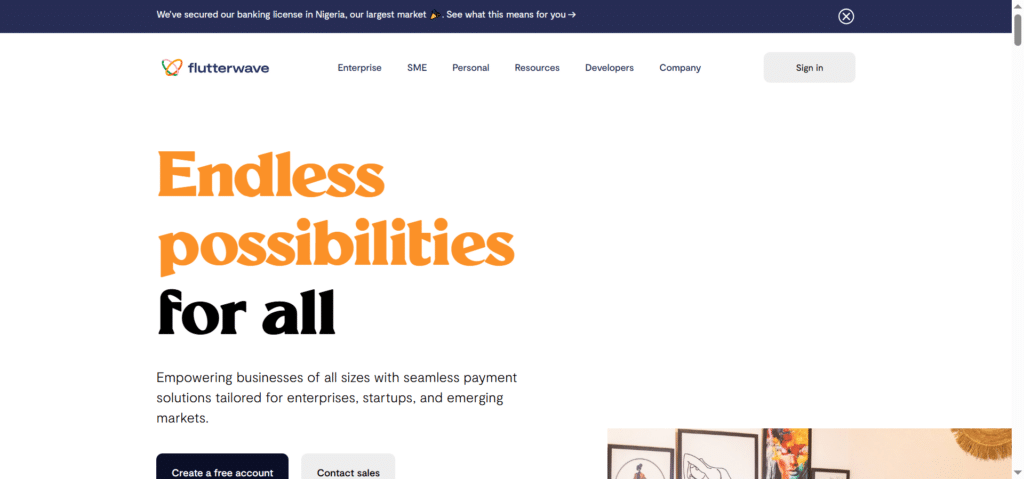
Every so often, a company comes along that changes the way an entire continent does business. Flutterwave is one of those companies.
Back in 2016, sending or receiving money across Africa was a headache. Businesses struggled to get paid. Customers got frustrated. And the whole system felt broken.
Fast forward to today, Flutterwave is worth over $3 billion. That is a unicorn and then some. But here is what makes their story special. They did not start with millions in funding or a fancy office. They started with a simple question: Why is this so hard?
For small business owners and startup founders reading this, the Flutterwave story matters. Not because you want to copy them. But because their path from idea to unicorn teaches real lessons about solving problems that actually matter.
At Charisol, we help small businesses and startups build digital products that solve real market problems.
And the Flutterwave story is a perfect example of how understanding a deep customer pain point can grow into something massive. Let us break down exactly how they did it.
The Problem That Needed Solving
Africa is not one country. There are 54 countries. Each with different currencies, different banking systems, and different rules.
If you ran a business in Nigeria and wanted to sell to someone in Kenya, getting paid was a nightmare. You needed multiple bank accounts. Multiple payment processors. And you still lost money to fees and exchange rates.
Big companies like Uber and Netflix had the same problem. They wanted to enter African markets but could not figure out how to get paid reliably.
This was not a small inconvenience. This was stopping businesses from growing. Stopping startups from launching. Stopping the entire digital economy from taking off.
The founders of Flutterwave saw this and thought: Someone needs to fix this.
The Idea Stage
Flutterwave was founded by Iyinoluwa Aboyeji and Olugbenga Agboola. Both had experience in the African tech space. They understood the payment problem from personal experience.
But here is what most people miss. They did not try to solve everything at once.
Their first idea was simple. Build one API that connects to every bank and payment system across Africa. A single tool that any business could plug into. And suddenly, accepting payments from anywhere becomes easy.
That was it. One API. No fancy features. No complicated dashboard. Just a bridge between businesses and banks.
This is something we see work again and again at Charisol. The best digital products do not start with a hundred features.
They start with one problem solved really well. You can always add more later. But you cannot fix a product that tries to do too much too soon.
The Early Days
When Flutterwave launched in 2016, nobody knew them. Why would a business trust a new company with their money?
They had to prove themselves. So they started small. They worked with local businesses first. They made sure every single transaction worked perfectly. They answered support calls at 2am. They did whatever it took to build trust.
And slowly, word spread.
One of their first big breaks came when they partnered with PayWithCapture, a small startup that later became part of Flutterwave. This gave them momentum. It showed that their solution actually worked.
By 2017, they had processed millions of transactions. Not billions yet. But enough to show that the idea had legs.
The Y Combinator Moment
In 2017, Flutterwave got into Y Combinator, one of the world’s best startup accelerators. This was a turning point.
Y Combinator gave them three things. Credibility. Mentorship. And access to investors.
But more importantly, it forced them to focus. Y Combinator pushes startups to grow fast. To talk to customers constantly. To build only what people actually need.
Flutterwave used this time to refine their product. They made their API even easier to use. They added better reporting for businesses. They improved their documentation so any developer could integrate in minutes.
When they finished the program, they raised $10 million from top investors including Greycroft and Green Visor Capital. Not unicorn money yet. But enough to hire a real team and go after bigger customers.
Going After Big Fish
Small businesses helped Flutterwave prove their product worked. But big companies would make them a real business.
Their first major enterprise customer was Uber.
Think about what Uber needed. They wanted to launch in multiple African countries. They needed to pay drivers in local currencies. They needed to collect payments from riders seamlessly. And they needed it to work perfectly from day one.
Flutterwave built a custom solution for Uber. It was not easy. But they delivered. And that partnership changed everything.
Suddenly, other big companies started calling. Booking.com. Flywire. Even Facebook used Flutterwave to help businesses in Africa sell through its platforms.
This is a classic business lesson. Start small. Prove you are reliable. Then go after the big names. Because when a company like Uber trusts you, everyone else pays attention.
Becoming a Unicorn
By 2021, Flutterwave had processed over 200 million transactions worth more than $10 billion. They were living in over 30 African countries. And they supported payments in 150 different currencies.
Investors took notice.
In March 2021, Flutterwave raised $170 million in a funding round led by Avenir Growth Capital and Tiger Global. This valued the company at over 1 billion. They were officially a unicorn.
But they did not stop there. A year later, they raised another $250 million, pushing their valuation to over $3 billion.
Today, Flutterwave powers payments for over 900,000 businesses across Africa.
They have offices in Lagos, San Francisco, London, Nairobi, and several other cities. And they keep expanding into new products like remittance services and business banking tools.
What Small Businesses and Startups Can Learn
Flutterwave’s journey from idea to unicorn is impressive. But the real value for you is in the lessons.
Lesson one: Find a real problem. Flutterwave did not build something cool. They built something necessary. Businesses genuinely could not get paid across borders. Fixing that problem created massive value.
Lesson two: Start focused. They did not try to build a full banking platform. They built one API. One simple solution to one painful problem. Get that right first.
Lesson three: Build trust slowly. Nobody trusted Flutterwave on day one. They earned trust by making every transaction work and answering every support call. Trust is not given. It is built.
Lesson four: Big customers open doors. Uber validated Flutterwave for every other enterprise customer. If you can serve a well-known brand well, other brands will follow.
Lesson five: Keep raising the bar. Flutterwave did not stop at unicorn status. They keep adding features. Keep entering new markets. Keep solving bigger problems. The work never ends.
How Charisol Helps Businesses Like Yours
Maybe you are not trying to build the next Flutterwave. Maybe you just want to launch a digital product that solves a problem for your customers. Or maybe you want to take your small business online for the first time.
That is exactly what we do at Charisol.
We are a digital design and development agency. We help small businesses and startups build custom digital products that actually help them grow. Websites. Mobile apps. Business tools. Whatever you need to serve your customers better.
Our founder, Dolapo Olisa, started Charisol because he saw a gap. Skilled tech talent in Africa was ready to build amazing things. And small businesses everywhere needed that help. He built a bridge between them.
Since then, we have worked with businesses in the UK, the US, Canada, and Nigeria. We have helped people launch digital products, improve their operations, and scale their businesses successfully.
Our process is simple. We listen first. We put users first. We do not try to reinvent the wheel. We find what works and innovate from there. And we build with honesty, collaboration, and empathy.
If you have an idea for a digital product but do not know where to start, we can help. If you have a business that needs better tools to serve customers, we can help. If you just want to understand what is possible, we can help with that too.
Frequently Asked Questions
What exactly does Flutterwave do?
Flutterwave helps businesses accept payments online across Africa. Instead of a business needing separate accounts for each country, Flutterwave provides one system that works everywhere. They also help businesses send money, manage payments, and access other financial services.
How did Flutterwave make money in the beginning?
Flutterwave charges a small fee on each transaction. When a customer pays a business using Flutterwave, Flutterwave keeps a percentage. This is the same model that PayPal and Stripe use. As more transactions flow through their system, their revenue grows.
Is Flutterwave only for big companies?
No. Flutterwave started with small businesses and still serves them today. Their tools work for anyone from a solo entrepreneur selling products online to a multinational corporation. They have different pricing and features for different business sizes.
What made Flutterwave different from other payment companies?
Flutterwave focused specifically on Africa. Other payment companies treated Africa as an afterthought. Flutterwave built its entire product around African banks, currencies, and business needs. That focus made them better for anyone doing business on the continent.
Can a small business really compete with companies like Flutterwave?
Yes, but not by copying them. Competing means finding your own unique problem to solve. Flutterwave solved cross-border payments.
Your business can solve a different problem for a different group of customers. The key is finding something people actually need and building a great solution.
How do I know if my business needs a custom digital product?
If you find yourself doing the same manual task over and over, that is a sign. If your customers complain about something being difficult, that is a sign.
If you have an idea that could help people but no way to build it, that is a sign. At Charisol, we help you figure out what makes sense for your specific situation.
Final Thoughts
Flutterwave did not become a unicorn by accident. They found a real problem. They built a simple solution. They earned trust one customer at a time. And they kept improving every single day.
That is a path any business can follow. Not everyone will become a unicorn. But everyone can build something useful. Everyone can solve a real problem for real people. Everyone can grow step by step.
The question is not whether you have the resources or the connections. The question is whether you are ready to start.
What problem are you solving for your customers today?
If you are ready to turn your idea into a real digital product, we would love to talk. Visit us at Charisol to learn more about how we help small businesses and startups build things that actually work.
Check out our About page to meet the team behind the work. Read our blog for more stories and lessons like this one.
Learn about our process to see how we build. And when you are ready, head to our get-started page to begin the conversation.
Your idea matters. Let us help you bring it to life.